
If you have ever wanted to turn your bathroom into a spa, salts are one of the easiest ways to do it. These mineral additions have been part of bathing rituals for centuries, and they remain one of the simplest ways to transform an ordinary bath into a restorative and relaxing experience.
Contents
What Are Bath Salts?
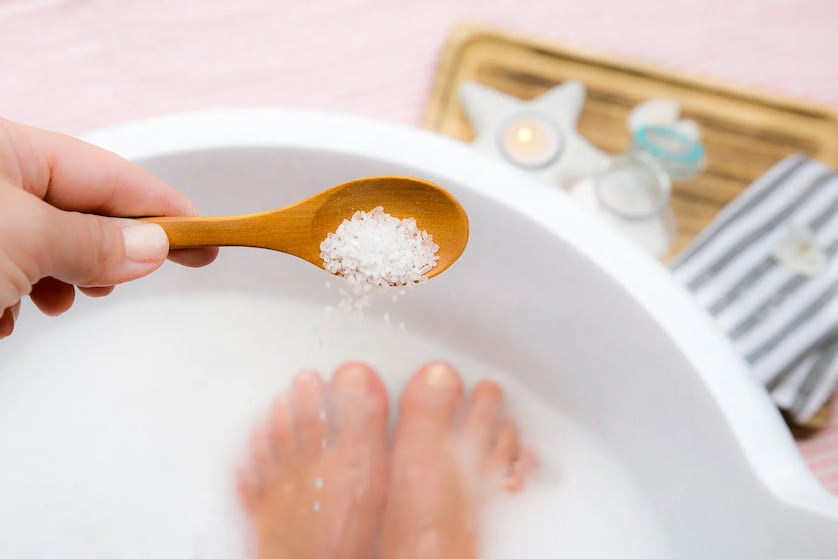
While “bath salts” is a general term, not all of them are necessarily salts. In fact, any kind of salt can be a bath salt, although some work better than others. Mineral-rich bath salts are pulverised, water-soluble crystals. They are widely used for self-care and stress relief, believed to help muscle recovery, skin rejuvenation, improve sleep, and more.
The Main Types of Bath Salts
Whether you’re looking for the best bath salts for personal pampering sessions or you want to buy bulk bath salts for your business, knowing the different types can help you make the right choice.
Epsom Salt
Epsom salt is perhaps the most widely used bath salt. Named after a bitter saline spring located in Surrey, England, it is not technically a salt but a natural mixture of minerals such as magnesium and sulphate. It has a crystalline appearance, a white solid structure, and is fairly soluble in water. The magnesium, known for its age-defying properties, provides the skin with moisture and makes it look radiant. Sulphur is a mineral-rich component with the power to remove impurities.
When Epsom salt dissolves in the bath water, your skin can absorb the magnesium and sulphate effortlessly. The minerals help in muscle recovery, reducing inflammation, and relieving muscle soreness after extended physical activities. The salt’s exfoliant properties also make it useful for removing dead skin and promoting a healthy, radiant complexion.
Himalayan Salt
Himalayan salt is formed as a result of pressure built up by the movement of the earth’s crust, which has been present for over 800 million years at 5,000 feet below sea level. This is where the original ocean’s elements are stored in the form of raw salt.
Himalayan salt is not harvested from the ocean, but rather from the foothills of Punjab province in Pakistan. This million-year-old pink rock salt is considered the purest type of sea salt, rich in calcium, magnesium, potassium, zinc, and more. Covered under the lava, snow, and ice, it has never been touched by the many toxins and contaminants of the modern world.
Himalayan salts usually come in three different grades: fine, coarse, and mixed. The fine grains are useful for face and body scrubs, while the other two are better used for bath time.
How to Use Bath Salts
In the Bath
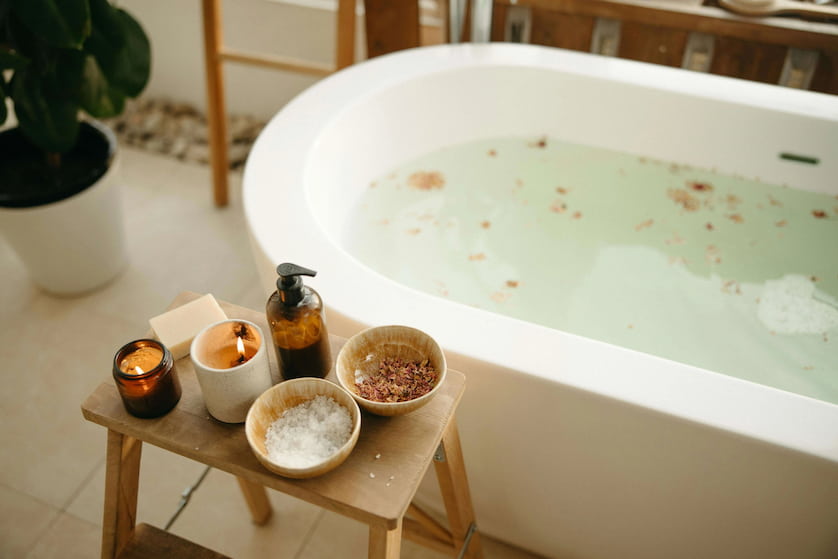
The most traditional way to use these salts is, naturally, to add them to a bath of warm water. To reap the full rewards of Epsom salts, it is recommended to have at least three baths a week, each containing 2 cups of salts in warm water. If you want to make the bath even more rejuvenating to the skin, you can add some oils, like lavender, coconut, grapeseed, or sunflower oil. It is important to note that you should never add soap to the bathwater when you are taking a bath with Epsom salt, as it may interfere with the minerals.
To make the most out of Himalayan salt, you should add a cup of salt to the bathtub and soak in it for no less than 20 minutes. The nutrients help to increase blood flow, which in turn allows the body to more readily absorb the 80 nourishing minerals contained in the Himalayan salt. You can also add other skin-loving ingredients, such as avocado oil, bergamot essential oil, jojoba oil, Moroccan argan oil, or shea butter.
As a Foot Soak
Another idea is to soak your feet in water mixed with a half-cup of Epsom salt for about 20 minutes. You can also rub your feet with pumice powder if there are some calluses. Your feet will look fresh, clean, and more beautiful.
As a Body or Foot Scrub
Making a body or foot scrub is a great way to revitalise your body or feet. This is because a body or foot scrub exfoliates your skin, removing dead cells while cleansing dirt, dust, etc. When using salt for foot scrubs, it is recommended to avoid using coarse salt granules, especially when using salt on your face. The salt granules should be fine.
Tips for Getting Started
It is surprisingly easy to make your own bathing salts at home, and it gives you control over what you put in. Consider mixing a few different types of salt into your recipe, such as Epsom salt, Himalayan salt, and sea salt. This allows you to take advantage of all the unique qualities that each type has to offer. You can also add dried flowers such as lavender or rose, a carrier oil such as almond or jojoba, and a few drops of your favorite essential oil.
Whether you want to relax after a long day, ease tired muscles, or pamper your skin with a little TLC, bath salts are among the most accessible wellness tools available. With a handful of good ingredients, you can transform your skin-care routine while relaxing after a long day at the same time.


