
ATV and UTV sales may have plateaued from their pre-pandemic peaks, but the quad bike accessory and part market is exploding. The vehicles are staples in agriculture. construction and recreational off-roading, among other uses, and appropriately fitted with extras like front and rear storage boxes, appointed bumpers, suspension upgrades and parts befitting of their all-terrain usability.
Often overlooked in this context are quad bike winches – simple yet functional upgrades that prove indispensable in recoveries, besides doubling as capable tools on the farm or worksite. The parts attach to the front frame rails, just below the bumpers and bull bars, ensuring the strength and pulling power to get quad bikes out of tight spots or haul heavy equipment and materials without buckling. If you haven’t already fitted your quad with a four wheeler winch of decent pulling capacity, chances are the quad isn’t seeing much use.
Manual vs. Electric Winches
Manual off-road winches intended for ATVs and side-by-sides are a dying breed, but their affordability, relatively simple use and maintenance and decent pulling power mean they can be used in limited scenarios. The winches work by cranking a hand lever to rotate a gear drum housing a cable or rope. This terminates in a hook that attaches to items or vehicles that are being moved or recovered. Obvious downsides are the physical strength needed to recover or haul heavier objects (despite the aid of selectable gears), the painfully slow recovery process and significantly lower pulling capacities, with most manual winches struggling with anything over 500 kilos.
Electric winches aren’t exactly new (patented models for ATVs date back to the late 1980s), but have significantly increased the utility of quad bikes. An electric four-wheeler winch operates on the same principle as a manual winch, but adds a heavy-duty motor for more pulling power, hands-free controls for self-recoveries or remote hauling, and additions like automatic brakes for enhanced safety.
With a consistent supply of battery power to run motors, drums and cabling, electric winches are for anyone serious about off-roading and daily work tasks requiring frequent hauling. The winches are tougher, faster and can pull and lift heavier loads, providing versatility and convenience in both work and recreational riding use.
Common Uses
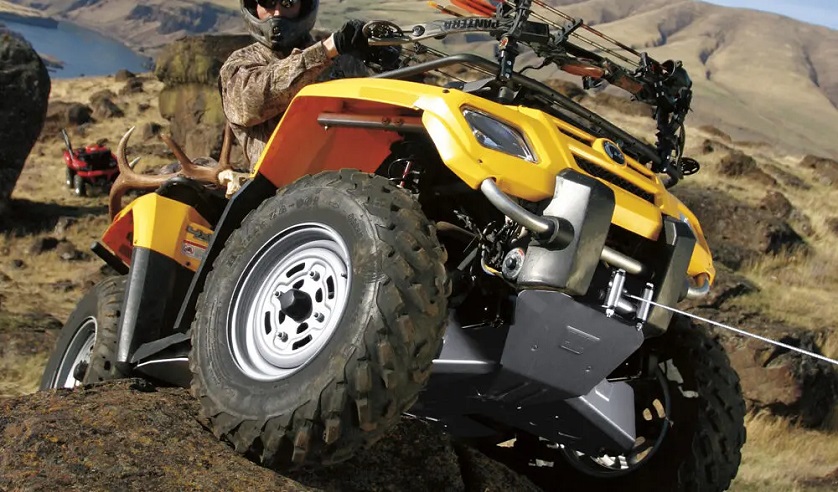
- Recovery and self-recovery: Electric winches are the ideal companion when pulling mates and other side-by-sides out of ruts and ditches, or adding the slight pull to get the vehicle going on its own. These quad bike accessories are also worth their salt in solo rides and self-recoveries, with no assistance in sight.
- Off-roading: Winches help on treacherous terrain, such as steep or slippery inclines, where even 4×4 drivetrains, mud tyres and low gears don’t provide enough traction to make it to the top.
- Farm work and landscaping: The accessories are necessary when clearing stumps, boulders and fallen trees; moving heavy farm machinery and lifting logs onto trailers. With the right attachments, winches are also used for ploughing.
- Construction: Use a high-capacity four-wheeler winch to haul building supplies, lift beams and rafters, tension fence lines, or remove site debris.
- General material handling: ATVs and bigger UTVS with the right winch and winch accessories are common on larger acreages in moving items such as water pipes, cabling and more. They can additionally pull damaged or non-operational machinery up ramps and onto trailers for speedy servicing and repairs.
Key Buying Considerations
When choosing an ATV or quad recovery winch, consider the following factors:
- Pulling capacity: This ranges from 900 kilos in smaller and more affordable electric winches to 2500 kilos in larger varieties intended for use with bigger UTVs. Pulling capacities understandably need to match quad bike size and capability. Oversizing the winch can lead to unneeded weight and extra cost, while underpowered winches might not meet your hauling and lifting needs, often leading to premature wear in motors, gearing and mounting assemblies.
- Synthetic rope vs steel cables: Synthetic rope is safer, stronger (has higher breaking capacity), is resistant to corrosion and generally easier to work with. It will also last longer if properly used, offsetting the higher purchase price. Steel is the more rigid option, preferred for winches with higher pulling capacities and heavy-duty recoveries and hauling tasks. However, it can pose serious safety risks if it snaps. Choose rope for recoveries in sand, mud and water, and angled recoveries due to higher flexibility, and steel cable for higher abrasion resistance against rocks and tree stumps.
- Build and size: Weatherproofed housings shield motors and sensitive electronics and ensure lasting durability. Choose compact designs for smaller ATVs, or more robust and larger winches for side-by-sides. Sizing the winch right also ensures easier installation and maintenance.
- Motor varieties: Permanent magnet motors offer quick operation, low power draw and decent pulling power, but can be susceptible to temperature extremes. For frequent daily work use, a better option is winches with series-wound motors. These feature more robust builds, higher torque for heavier loads and consistent power throughout longer tasks. They are, however, more expensive and drain more of the quad bike battery.
- Winch accessories: Choose snatch blocks to essentially double pulling capacity, remotes to aid in self recoveries and packaged straps, hooks and shackles for lower costs and improved versatility. Also consider safety and convenience features such as fairleads to guide rope and cabling, reduce friction and wear, and recover at an angle, and hook stoppers to prevent hooks from smashing against fairleads and the winch housing.


