
How much time does your team lose each week pushing a mop across warehouse aisles, production floors, or loading areas only to find tire marks, dust, and grime returning before the next shift ends? Large industrial spaces create a cleaning problem that basic tools struggle to handle because dirt spreads across wide floor areas, traffic rarely stops, and crews still need to work around people, pallets, racks, and equipment.
Industrial floor scrubbers combine scrubbing, solution control, and dirty-water pickup in one machine, so your team can cover more floor in less time and avoid repeatedly working over the same sections by hand. An effective and easy-to-use industrial floor scrubber can also help you control labour hours, reduce water and detergent waste, and keep daily floor care more consistent without turning routine cleaning into a major production interruption.
Contents
Why Do You Need Industrial Floor Scrubbers?
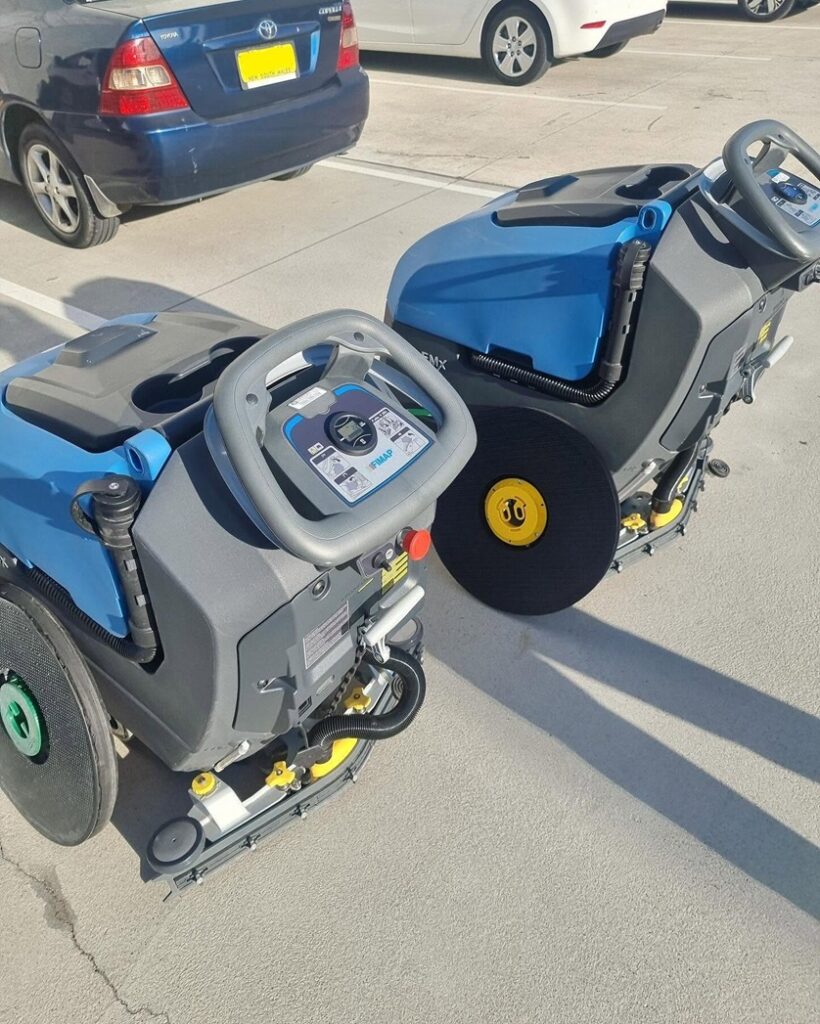
In a warehouse or production site, floors collect dust, tire marks, grease, and tracked-in debris, especially near loading docks, machine areas, and the narrow paths around shelving systems. Industrial floor scrubbers give you a practical way to handle those messes across large spaces without relying on slow, repetitive mopping.
1. Clean More Floor in Less Time
A mop can handle a small spill or a quiet corner, but it becomes slow work when your team has hundreds or thousands of square metres to clean. Industrial floor scrubbers combine several steps into one pass: they apply cleaning solution, scrub the floor, and collect dirty water as the operator moves through the area. That cuts down on repeated trips with buckets, wringers, and wet-floor cleanup, which gives your crew more time for other facility tasks.
The time savings matter most in places that cannot simply stop for cleaning. Warehouses still have orders to move, factories still have production schedules, and loading areas can fill up quickly if cleaning blocks a route. A scrubber lets you plan shorter cleaning windows and work through large zones in a more organised way. If you manage a wide, open floor, a ride-on model can cover it faster, while a walk-behind unit can suit smaller sections and tighter aisles. You can choose the size based on your actual cleaning route instead of forcing one tool to do every job.
2. Get Better Results on Grime, Marks, and Spills
Industrial floors deal with more than loose dust. Forklift tires can leave dark marks, production work can create oily residue, and tracked-in dirt can settle into textured concrete or grout. A mop may spread some of that soil across the floor, especially once the bucket water turns dirty. Scrubbers use brush or pad contact to loosen buildup, then pull the used solution into a recovery tank instead of leaving it on the surface.
That process gives you more control over repeat problem areas. You can choose a suitable pad or brush for the floor material, adjust the cleaning approach for heavier soil, and give busy sections extra attention without scrubbing the whole building by hand. Smooth sealed floors often work well with disc brushes or pads, while cylindrical brushes can help on textured surfaces and areas with small debris. Always check the floor manufacturer’s care guidance before choosing a brush or chemical. The goal is not to use the most aggressive setup. You want enough cleaning action to remove the soil without wearing down the finish faster than necessary.
3. Reduce Slip Risks and Reopen Aisles Faster
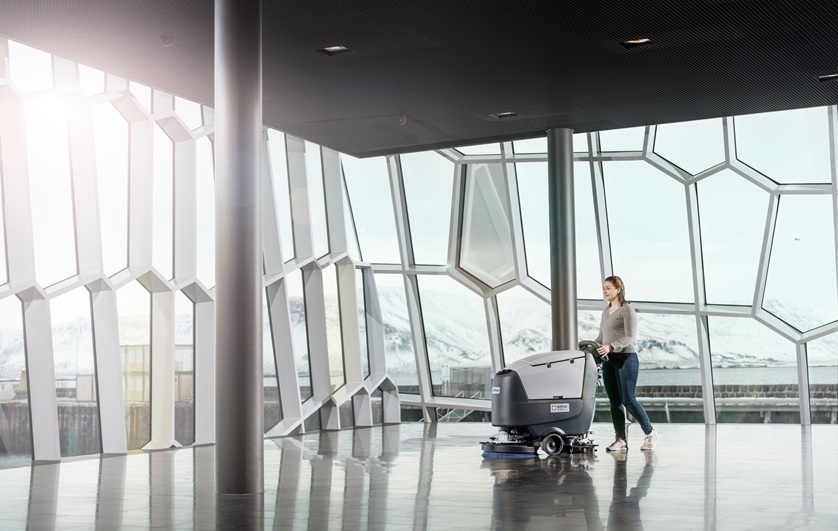
Wet floors can slow down a busy facility because people and equipment may need to avoid the area until the surface dries. Industrial floor scrubbers collect much of the dirty solution as they move, which can leave less water behind than traditional mopping. That helps you reduce the amount of time you need to block an aisle, entrance, or work zone after routine cleaning.
This matters in high-traffic areas where a long closure creates its own problems. A warehouse may have forklifts crossing the same route all day, while a retail stockroom or production site may have staff moving carts, tools, and materials between departments. Faster water recovery can help you reopen those paths sooner and reduce the chance that someone walks through a freshly mopped section. You still need signs, operator training, and a sensible cleaning schedule, since no machine removes every floor hazard on its own. Check the squeegee blades, vacuum system, and recovery tank regularly as well. Good maintenance helps your scrubber collect water properly instead of leaving streaks or puddles behind.
4. Cut Labour, Water, and Detergent Costs
Labour often accounts for a large share of floor-cleaning costs, so the number of minutes spent on each section matters. When one operator can scrub and recover dirty water in the same pass, you can cut some of the repeated manual work that comes with mopping, rinsing, wringing, and changing buckets. That does not mean you should reduce staffing without looking at the full cleaning plan. It means you can put those work hours into corners, restrooms, touchpoints, inspections, or other tasks that still need hands-on attention.
You can also control supply use more closely. Many scrubbers meter water and cleaning solution as the operator works, which helps prevent the heavy pouring that can happen with bucket cleaning. Over time, lower water use, fewer repeated passes, and more controlled detergent use can reduce routine operating costs. When comparing machines, look beyond the purchase price. Check battery replacement costs, brush and squeegee wear, service access, parts availability, tank capacity, and expected daily cleaning time. A lower-priced machine can cost you more if it needs frequent repairs or forces your crew to stop often for refills.
5. Handle Both Open Floors and Tight Aisles
A useful scrubber should fit the way your facility actually works, not just the total floor area on a spec sheet. Start by looking at aisle width, turning space, doorways, ramps, floor type, drainage points, and the number of obstacles your operator needs to work around. A large ride-on unit can suit broad warehouse lanes, but it may waste time in cramped stock areas. A compact walk-behind model can handle tighter paths, though it may take longer across a large open floor.
Also think about how long your team cleans between charging, refilling, and emptying the recovery tank. Bigger tanks can reduce refill stops, while a wider cleaning path can cut the number of passes across open space. Those gains only help if the machine can move through your normal route without awkward three-point turns or repeated backing. Ask for a demonstration in your own facility when possible, and test the machine on the soil you actually deal with. Check how close it can clean to racks, walls, and corners, and see how easily your staff can empty, rinse, and inspect it after a shift.


