
In the industry of fast-locking mechanical fasteners, toggle-style latches are as close to perfection as it gets. That’s because unlike a multitude of mechanical latches that utilise cams, pushes, and a host of other complex slides and multi-point catches, toggle latches rely almost exclusively on physics.
Their leverage-induced, over-the-centre operation makes them practically impervious to mechanical failure, without sacrificing their ability to be quickly engaged or released with just one hand. The result is a two-part fastener that not only benefits from fewer breakable parts, but is nearly impossible to force open without actually breaking the door and entryway that it’s securing..
Contents
Simplicity Gives Over Centre Latches the Mechanical Advantage
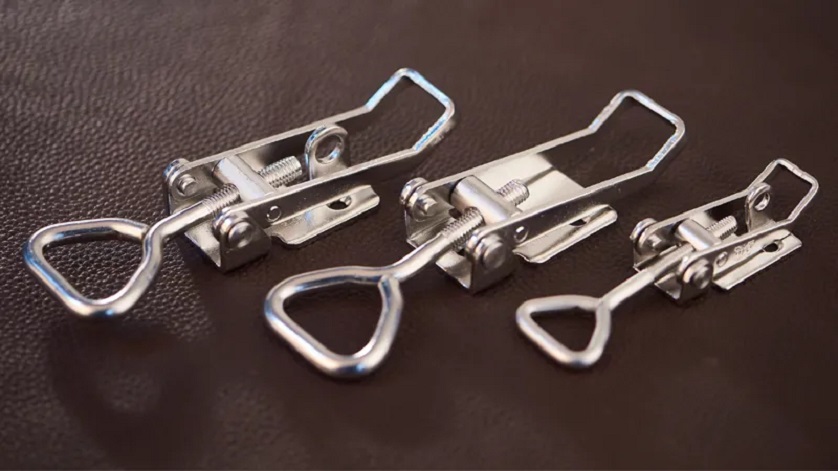
Let’s be honest: as we’re living in an era when the ability to secure doors hatches and other openings is rated largely by the complexity of the fasteners keeping them shut, the strength and simplicity of pivot-type over centre fastener assemblies continues to be hugely worth of recognition.
The pivoting paddle of a toggle-style latch functions like a lever which, when flipped over the centre of the body of the fastener, creates tension that draws both sections of the latch together. And as the amount of tension created by over centre fasteners can also be adjusted by tightening or loosening the paddle, they’re the only mechanical-style latches that can be counted on, if necessary, to compensate for worn door gaskets, hinges or other components that might otherwise prevent it from sealing properly.
The design of toggle latches also means that only a force equal to or greater than the force needed to draw the paddle over the centre can open the latch. And with no tools, keys or pushes required, they’re able to enjoy a range of mechanical advantages that include:
- Excellent holding force. The force multiplication factor afforded toggle-style latches allows them to increase their clamping tension by as much as 10x without the need to apply more leverage to either engage or release the paddle.
- Constant tension at all times. Once engaged, toggle-style latches aren’t prone to slipping or unexpectedly releasing tension. Their tension is constant every time, ensuring there’s no loosening or blowby around the entryway, while also protecting the door from undue tension.
- Exceptional resistance to vibration. The constant tension applied by toggle-style over centre latches is unaffected by the kinds of movement and vibration that could cause other types of locking and latching mechanisms to accidentally release.
Toggle-style latches are unique in that in spite of the ease that they can be engaged, they’re virtually impossible to force or pry open. Attempting to brute force an over centre latch open actually increases the tension at the point where the paddle is locked. That qualifies these simple latching mechanisms among the most secure, especially when used with padlockable base plates.
Applications Where Over Centre Latch Simplicity Is Preferred
From the light-duty paddle handled latches typically used to secure ute toolboxes, to the heavy duty over centre toggle latches used in industrial applications, the strength of over centre fasteners allows them to excel wherever they’re installed. Toggle-style latches also enjoy a far more compact footprint than other types of locks and latches. They don’t require morticing, and their naturally low-profile design doesn’t require anymore clearance than is necessary to engage or release the paddle.
The subtle outlines of over centre latch assemblies also lend themselves to a wider range of applications than other types of latches. That’s why in addition to conventional toolboxes and industrial cabinets, they’re highly preferred for an array of non-conventional door, hatchway and entryway solutions that involve the following:
- The safety and longterm storage of high value plant, utility or other equipment with very precise custodial requirements;
- Maintaining sensitive temperatures in climate-controlled cool rooms and freezers;
- Shipping and transport containers that would otherwise be prone to opening due to vibration;
- Watertight marine, and dust-proof worksite operations cabinets and enclosures; and,
- Tamper-proof and leak-proof storage of goods and materials that are dangerous or hazardous.
And where cam-, compression- and spring-type latches can experience a multitude of mechanical problems that could prevent them from engaging or releasing, the simplicity of toggle-style over centre fasteners guarantees them largely maintenance-free operation throughout their lifespan. Their standard choice of 304 stainless, or zinc- or electro-plated finishes helps ensure corrosion-free operation, while the adjustable paddles prevent them from being overtightened to the point where excess tension could damage the latch’s pins or mounting points.
The fact is, given their strength, simplicity and effectiveness, the real concern with toggle-style latches is actually the integrity of the surfaces they’re mounted to. That’s why before mounting an over centre latch, it’s important to be sure that the mounting surface is genuinely suitable for the type of latch being used.
Reasons To Regularly Inspect Over Centre Latch Mounting Surfaces
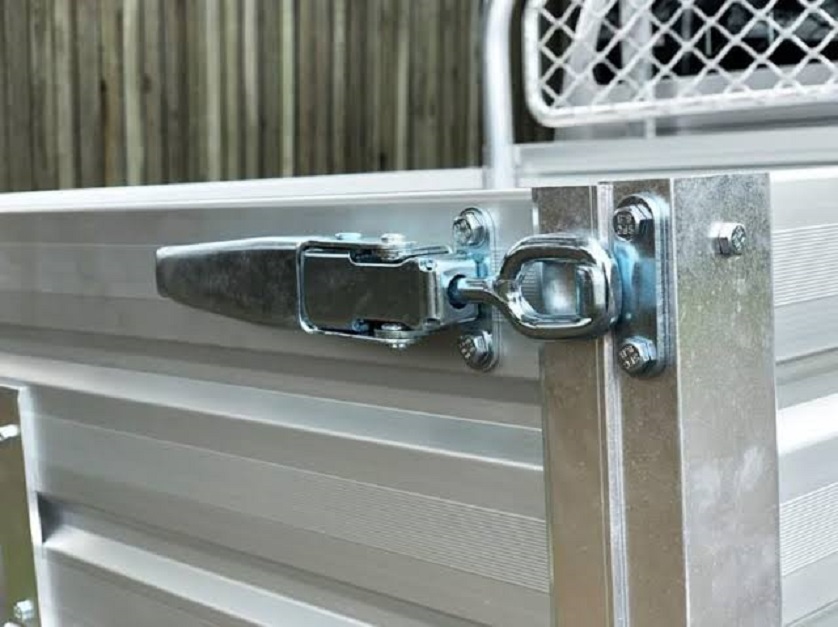
With the heaviest duty over centre latches capable of producing locking tensions exceeding 7000kg UTS (ultimate tensile strength), it’s easy to understand why the reliability of latch mounting surfaces can’t be overlooked. Extreme temperatures, prolonged exposure to moisture and even minor structural shifts can all compromise the reliability of mounting surfaces, and even the amount of sustainable tension a latch is able to safely produce. That’s why the following latch and mounting surface attributes need to carefully and periodically accessed.
- The condition of all mounting surfaces. While metal doors and entryways aren’t ordinarily prone to stability problems, their wooden equivalents are highly prone to weakening due to environmental stresses. Depending on the application, they may require reinforcing before an over centre latch is installed.
- Investigate signs of door creep. Doors that “creep” open or get closed on their own are an indicator that some part of the entryway, whether it be the frame or the hinges, are misaligned and cause the latches to become misaligned. Both the door and the entryway need to be checked for squareness and, where required, corrected to avoid damage or failure of either the latch or the entryway.
- Latch placement as a safety centrepiece. The aesthetics of low-profile latches, latches that protrude so far that they can become snagged on clothing or equipment, pose a serious occupational hazard. In addition to personal injuries though, the risk of damaging the latch and its mounting surfaces are considerably increased, making regular inspections of both for impacts an urgent centrepiece for safety.
Ideally, as latches, entryways and entryway hardware all have to function as a single component, anything that risks jeopardising the integrity of one aspect risks compromising the entire structure. Periodic inspections are the key to avoiding structural problems that could have costly, or potentially catastrophic consequences in any case of failure.
The Final Word
At the end of the day, whether it’s their uncommon strength, unmatched simplicity or virtually cost-free maintenance, toggle-style latches are in a league all their own. And the fact that they’re the only industrial type latch that can be adjusted to compensate for other entryway imperfections explains why businesses frequently purchase and install them by the thousands.
Pivot-type over centre fastener assemblies are as simple as they are effective. And in a world that’s obsessed with security, they’re the right answer at the best price.


